4
Wystąpił nieoczekiwany błąd
 DEC 11 / 2025
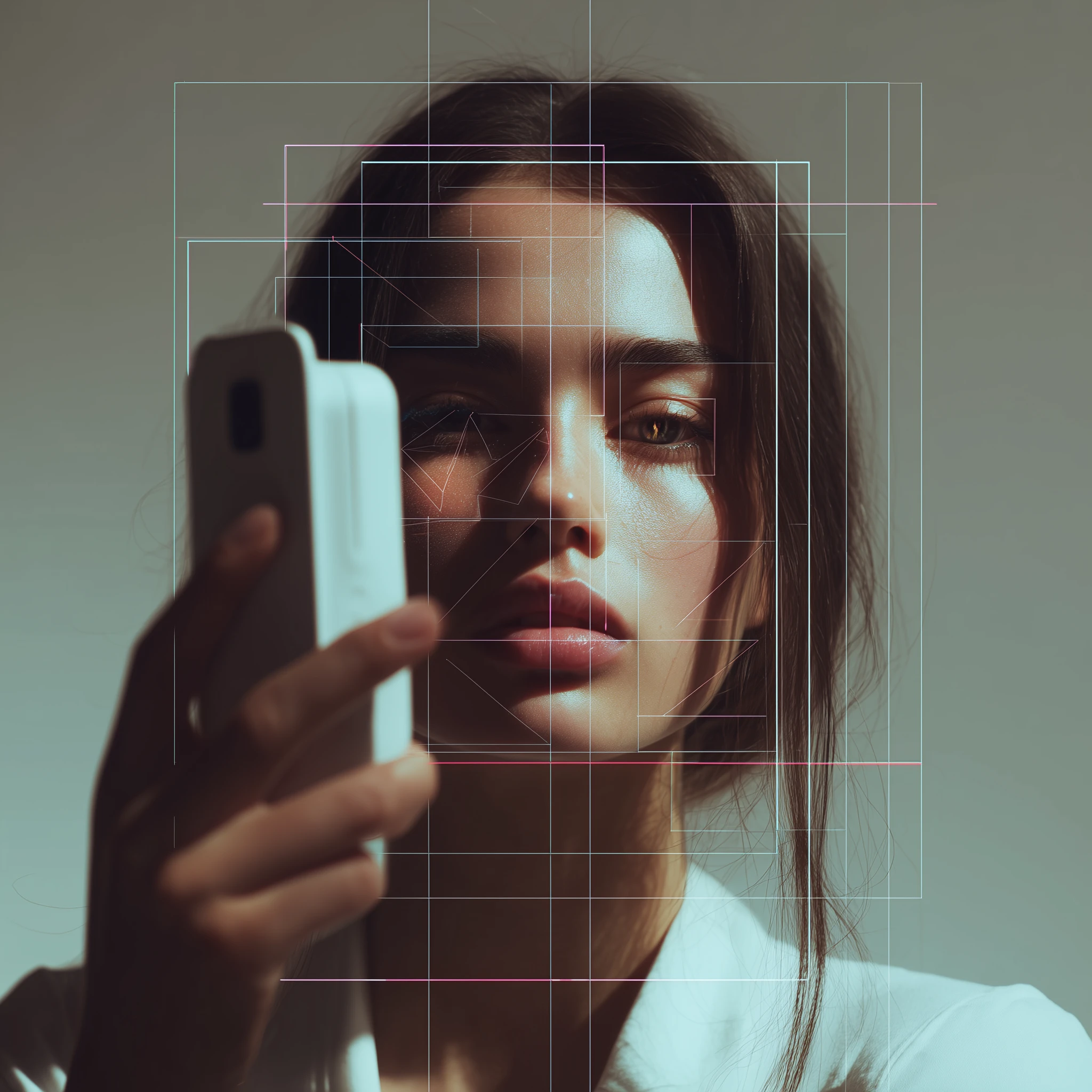
In 2026, taking a selfie is no longer just a casual moment.
Imagine snapping an ordinary photo of your face, the kind you post on Stories or send to friends every day. Seconds later, your screen displays a report that looks more like a clinical lab result than a beauty app output. No more guessing “I think I have dry skin” or “maybe I’m getting more wrinkles.” Instead, you get hard numbers, heatmaps, and a clear answer to the question: how old is your skin really, and what’s truly affecting your appearance?
This is exactly what happens with Molecooles, a tool designed not for fun filters, but to eliminate guesswork in skincare and enable fact-based beauty protocols that actually deliver results.
All it takes is a good photo of your face with your smartphone. Best conditions: natural daylight, no makeup, no glasses, hair pulled back, face straight to the camera.
The system instantly checks if the lighting is adequate, the angle is correct, and the image is sharp enough. If anything is off, it gives clear instructions on what to fix. The analysis usually takes just a few seconds. Once complete, you receive a detailed view of your skin at a level invisible in the mirror or to the touch.
At the top, the most important metric: Face Age Score, your skin’s biological age. You might be 32 chronologically, but your skin could register as 24. Or at 38, it might show 46 if it’s aging faster. This isn’t random; it’s calculated from dozens of biomarkers that together create a highly precise picture.
Then the report moves on to specifics. It shows how deep and dense your wrinkles are, distinguishes small mimic lines that appear when smiling. It measures how much firmness and elasticity is still left in the skin, how much the oval of the face is sagging, and whether the first signs of volume loss in the cheeks and temples are visible.
A lot of space is also devoted to color and pigmentation. You will see how many sun discolorations you have, how many freckles, whether changes of the melasma type are beginning. The system can separate ordinary redness from inflammation, which may be an early signal of rosacea. It also shows how even your color is, because it is the unevenness that ages the face very strongly, even if there are no deep wrinkles on it.
Skin texture is another big category. The report describes how large and visible the pores are, how rough the surface is, how many micro-wrinkles, acne scars and general “wrinkled” texture there are. A separate chapter is devoted to the eye area, bags, shadows (both vascular and pigment), thinness of the skin under the eyes, first “crow's feet”. At the end you also get indicators related to the skin barrier and inflammation, whether the skin is dehydrated, whether active inflammations are visible, whether capillaries are starting to be more visible.
All this is presented in a readable form: specific point results, comparison to the age group and skin type, percentiles, and additionally colorful heatmaps that precisely show where on your face the problem is the strongest.
Because you no longer have to guess.
Instead of wondering “does this new cream do anything?”, you simply do a scan every 6-8 weeks and see the numbers. You receive specific data, e.g. that pigmentation dropped by 22 points, firmness increased by 17 points, and redness decreased by one third. Or vice versa, that despite expensive cosmetics nothing moved, so it's time to change the strategy.
It also turns out very often that what ages us the most is not wrinkles at all. Many people find out that the main culprit is chronic redness combined with uneven color and slight surface dehydration. When these three things improve, the face can “rejuvenate” in the eyes of AI by 7-10 years. And most importantly, also in the eyes of real people.
For many people, this is the first time they really understand what they should focus on. Instead of buying everything one by one, they suddenly have a clear list of priorities: first calm the inflammations, then even out the color, only later deal with firmness.
The technology in Molecooles is based on models trained on over three million photos of skin in very different shades and types, from very light to very dark complexion. The latest version of the analysis achieves a correlation with the assessments of experienced dermatologists at the level of 91-96% in most categories. This means that the results are comparable to what a very good specialist would say using clinical scales and a dermatoscope, only faster, cheaper and always in exactly the same measurement conditions.
Based on research published in The Lancet Digital Health regarding AI in assessing biological age from facial photographs, prof. Hugo Aerts stated:
„We can use artificial intelligence (AI) to estimate a person’s biological age from face pictures, and our study shows that information can be clinically meaningful.”
prof. Hugo Aerts, The Lancet Digital Health, 2025
Primarily to stop living in assumptions.
To see what is really happening with the skin, not only today, but what trends are visible from several months back. To have hard data that helps you choose the best care, treatments, and even lifestyle. To finally feel that you have control, instead of constantly looking for another “miraculous” product.
The first scan costs nothing. It takes a dozen or so seconds. And it may change the way you look at your skin for the next few years.
Take the photo now!